
The Ancient Path to Aligning With the Dao, Nurturing Qi, and Cultivating the Self
Taoist cultivation is not a mysterious, esoteric practice reserved for monks or masters—it is a profound, practical system of spiritual growth rooted in the core principles of Taoism, designed to help humans reconnect with the Dao, harmonize their inner energy, and achieve a state of balance that transcends suffering, anxiety, and disconnection. Unlike many spiritual traditions that chase external enlightenment or divine intervention, Taoist cultivation focuses on internal transformation—nurturing the body, calming the mind, and awakening the spirit to live in harmony with the natural order of the universe.
At the heart of Taoist cultivation lies the belief in the Dao—the unnameable, eternal force that is the source of all life, energy, and balance. The Dao is neither good nor evil, nor is it a deity to be worshipped; it is the underlying rhythm of the universe, the flow of energy that connects all things. Taoist cultivation begins with the understanding that we are not separate from the Dao, but extensions of it. Our bodies, minds, and spirits are all manifestations of the Dao’s energy, and when we lose alignment with this flow—when we rush, worry, cling to desires, or neglect our inner selves—we experience imbalance, stagnation, and suffering.
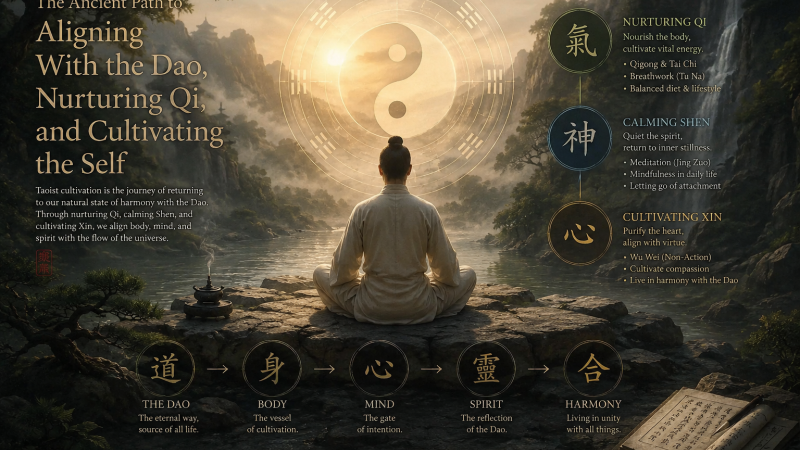
The goal of Taoist cultivation is not to “achieve” a distant state of enlightenment, but to return to our natural state of harmony with the Dao. This return is a lifelong journey, guided by three core pillars: nurturing Qi (vital energy), calming Shen (spirit), and cultivating Xin (mind/heart). These three pillars are interconnected—each supports the other, and together they form the foundation of a balanced, spiritual life.
Qi, often translated as “vital energy,” is the life force that flows through all things. It is the energy that animates the body, fuels the mind, and connects us to the universe. In Taoist philosophy, Qi is the bridge between the physical and spiritual worlds; when it flows freely and abundantly, we are healthy, vibrant, and aligned with the Dao. When it is stagnant, blocked, or depleted, we experience physical illness, mental anxiety, and spiritual disconnection.
Cultivating Qi is the first step in Taoist practice, and it begins with honoring the body as a sacred vessel of the Dao. Unlike traditions that view the body as a barrier to spirituality, Taoism teaches that the body is essential to cultivation—without a healthy, balanced body, Qi cannot flow, and the spirit cannot awaken. Practices to nurture Qi include:
- Qigong and Tai Chi: Gentle, intentional movements designed to unblock meridians (energy pathways) and guide Qi through the body. These practices are not just exercise—they are meditations in motion, combining breath, movement, and mindfulness to harmonize the body’s energy with the universe’s flow.
- Breathwork (Tu Na): Conscious, rhythmic breathing to draw in pure, cosmic Qi and expel stagnant, negative energy. Taoist breathwork emphasizes deep, slow breaths that connect the lower abdomen (the Dan Tian, or energy center) to the universe, allowing Qi to accumulate and flow freely.
- Diet and Lifestyle: Eating seasonal, whole foods that align with the Five Elements (wood, fire, earth, metal, water) to nourish the body’s organs and support Qi production. Avoiding excessive indulgence in alcohol, processed foods, and negative emotions—all of which deplete Qi and disrupt balance.
The second pillar of Taoist cultivation is calming Shen—the spirit, or the consciousness that resides at the core of our being. Shen is the part of us that connects directly to the Dao; it is our true self, unclouded by ego, desires, or distractions. When Shen is calm and centered, we are clear, peaceful, and able to see the world as it is—free from the illusions of fear, greed, and attachment. When Shen is scattered, we are anxious, restless, and disconnected from our true nature.
Cultivating Shen involves quieting the mind and letting go of the thoughts and emotions that cloud our consciousness. Taoist practices for calming Shen include:
- Meditation (Jing Zuo): Sitting quietly, focusing on the breath or the Dan Tian, to still the mind and connect with the Shen. Unlike many forms of meditation that aim to empty the mind, Taoist meditation focuses on “guarding the mind”—observing thoughts without attachment, and returning to the present moment with gentle awareness.
- Mindfulness in Daily Life: Bringing presence to every action—eating, walking, working—by focusing on the task at hand and letting go of distractions. This practice trains the mind to stay centered, even in the chaos of modern life, and helps us align our actions with the Dao’s natural rhythm.
- Letting Go of Attachment: Releasing the need to control outcomes, cling to past regrets, or crave future desires. Taoism teaches that attachment is the root of suffering; by letting go, we free the Shen to rest in its natural state of peace and harmony.
The third pillar of Taoist cultivation is cultivating Xin—the mind/heart, which is the seat of our emotions, desires, and intentions. In Taoism, the mind and heart are not separate; they are one entity that shapes our perception of the world and our relationship with the Dao. Cultivating Xin means purifying our intentions, letting go of negative emotions (anger, greed, jealousy), and nurturing kindness, compassion, and humility—qualities that align us with the Dao’s loving, balanced energy.
Taoist teachings emphasize that our thoughts and intentions shape our Qi, and our Qi shapes our reality. A pure, kind heart generates positive Qi, which attracts blessings, harmony, and connection. A negative, unbalanced heart generates stagnant, harmful Qi, which leads to suffering and disconnection. Cultivating Xin involves:
- Practicing Wu Wei (Non-Action): Not acting out of impulse, greed, or fear, but acting in alignment with the Dao’s natural flow. Wu Wei is not laziness; it is intentional, effortless action—doing what needs to be done without forcing, controlling, or clinging to results.
- Cultivating Compassion (Ci Bei): Extending kindness to ourselves and all living beings, recognizing that we are all connected through the Dao. Compassion opens the heart, allowing positive Qi to flow and nurturing a sense of unity with the universe.
- Embracing Humility: Letting go of ego and recognizing our place in the larger order of the universe. Humility helps us avoid arrogance and greed, and it allows us to learn from the Dao’s wisdom and the world around us.
Taoist cultivation is not a one-size-fits-all practice—it is a flexible, adaptive journey that meets each person where they are. It does not require hours of meditation, complex rituals, or deep knowledge of ancient texts (though these can enhance the practice). Instead, it requires presence, intention, and a willingness to return to the Dao, again and again, in the small moments of daily life.
Unlike many spiritual traditions that promise quick fixes or external rewards, Taoist cultivation is about slow, steady transformation. It is about becoming more attuned to your body’s needs, more peaceful in your mind, and more connected to the world around you. It is about recognizing that the Dao is within you— in your breath, in your movements, in your heart—and that your greatest power is the power to align with it, every single day.
In the end, Taoist cultivation is not about changing the world around you—it is about changing yourself. When you nurture your Qi, calm your Shen, and purify your Xin, you become a vessel of the Dao’s balance and harmony. You begin to live in flow, free from suffering and anxiety, and you attract the same balance and harmony into your life. This is the true essence of Taoist cultivation: returning to the Dao, not as a distant goal, but as a way of life—simple, gentle, and profound.
Quick Answer
Learn the ancient path of Taoist cultivation through aligning with the Dao, nurturing Qi, calming Shen, cultivating Xin, Qigong, breathwork, Wu Wei and daily self-cultivation.
Questions This Guide Answers
- What does Taoist Cultivation mean in Taoist, Feng Shui, or modern spiritual culture?
- How can readers understand protection jewelry, amulets, talismans, charms, luck rituals, or symbolic objects without treating them as guaranteed outcomes?
- How does this idea connect to personal intention, cultural meaning, and everyday mindful practice?
Reader Note
Seer articles explain cultural symbolism and spiritual traditions for general learning. They are not medical, financial, or legal advice.
Leave a comment