
A new wave of interest in astrology, tarot, fortune-telling, spiritual wellness, and symbolic protection objects is reshaping how many Americans talk about uncertainty, identity, and emotional grounding. This cultural news analysis looks at why spiritual guidance is moving into mainstream life — and where Taoist-inspired protection symbols fit into that broader shift.
Source Basis
This article is based on North American public research and news reporting.
Pew Research Center reported in 2025 that 30% of U.S. adults consult astrology, tarot cards, or fortune tellers at least once a year, based on a nationally representative survey of 9,593 U.S. adults conducted in October 2024.
AP News reported on the same Pew survey, noting that about 3 in 10 American adults use astrology, tarot, or fortune-telling at least yearly, while only a small share rely heavily on these practices for major decisions. AP also reported that the U.S. psychic services industry generated about $2.3 billion in revenue in 2024.
Pew Research Center’s 2023 spirituality study found that 70% of U.S. adults describe themselves as spiritual in some way, including 22% who are spiritual but not religious.
Pew’s earlier research on New Age beliefs found that roughly six-in-ten American adults accept at least one New Age belief, including beliefs in psychics, spiritual energy in physical objects, reincarnation, or astrology.
National Geographic describes Taoism as a tradition centered on harmony with the universe and the energy within it, often called qi, which provides a useful cultural framework for understanding Taoist-inspired protection symbols in a modern context.
Across North America, spiritual guidance is no longer limited to private readings, occult shops, or fringe communities. Astrology apps, tarot cards, fortune-telling content, crystals, intention rituals, and protection symbols have become part of a wider cultural conversation about stress, uncertainty, identity, and emotional support.
This shift does not mean that Americans are suddenly replacing conventional religion, science, or practical decision-making with divination. The picture is more complicated — and more culturally interesting.
A 2025 Pew Research Center report found that 30% of U.S. adults consult astrology, tarot cards, or fortune tellers at least once a year. But the same survey also found that most people do not treat these practices as strict life instructions. Many approach them casually, for fun, reflection, or insight rather than as a primary source for major life decisions.
That distinction matters. The rise of spiritual guidance tools in the United States is not simply a story about belief. It is also a story about emotional utility: how people use symbols, rituals, and interpretive tools to make sense of pressure, transition, and uncertainty.
A Mainstream Interest, Not Just a Niche Trend
For years, astrology and tarot were often treated as niche interests. Today, they are far more visible. They appear in social media content, wellness conversations, dating profiles, lifestyle branding, mobile apps, gift products, and identity-based communities.
AP News reported on Pew’s findings by noting that about 3 in 10 American adults use astrology, tarot cards, or fortune tellers at least once a year. Yet only a small fraction rely heavily on what they learn from these practices when making major decisions. The same AP coverage also pointed to the commercial size of the field, reporting that the psychic services industry generated about $2.3 billion in revenue in 2024.
For independent brands, this is an important signal. The modern spiritual market is not limited to people with formal religious commitments. It also includes people who are spiritually curious, emotionally overwhelmed, aesthetically drawn to symbolic objects, or looking for small rituals that bring meaning to daily life.
In other words, spiritual products are no longer only about belief systems. They are also about personal language.
People use them to say:
“I need clarity.”
“I want protection.”
“I am entering a new chapter.”
“I want to feel grounded.”
“I want something meaningful close to me.”
This is where protection symbols enter the conversation.
From Fortune-Telling to Emotional Grounding
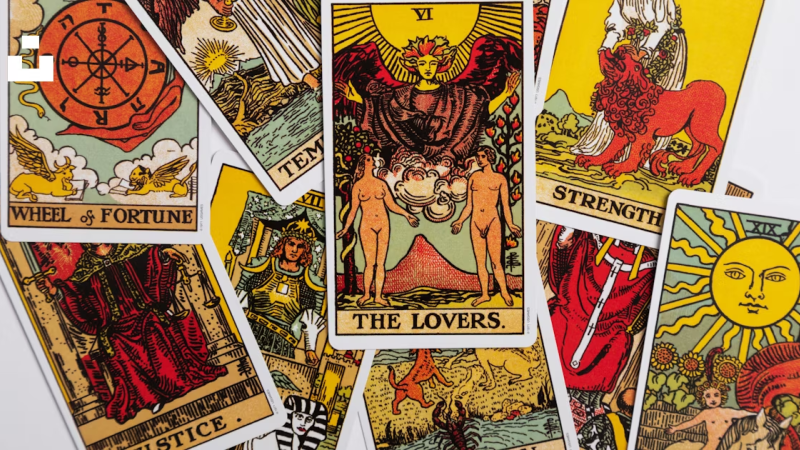
Astrology and tarot often receive the most attention because they are easy to recognize. They offer personality language, timing language, relationship language, and a sense of narrative. A horoscope can turn uncertainty into a story. A tarot card can turn confusion into a symbol. A reading can make someone feel seen, even if they do not treat it as absolute truth.
Protection symbols work differently.
They are less about prediction and more about presence.
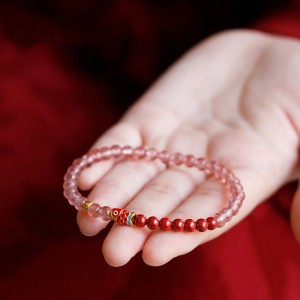
A protection charm, good luck bracelet, amulet pouch, herbal sachet, talisman card, or symbolic pendant does not necessarily answer a question. Instead, it gives the owner something to carry, place, touch, smell, or see.
That physicality matters. In a digital world, symbolic objects provide a sense of material grounding. They turn abstract emotional needs into something visible and personal.
This is one reason protection objects can fit naturally into modern spiritual wellness. They are not only decorative. They act as small personal anchors.
A charm in a car may represent safe travel.
A sachet in a bedroom may represent peace and rest.
A cord bracelet may represent protection and boundary.
A talisman card in a bag may represent blessing and intention.
A symbolic gift may represent care during a life transition.
For many consumers, the object is not about proving a supernatural claim. It is about carrying meaning.
The Spiritual but Not Always Religious Consumer
The American religious landscape also helps explain this shift. Pew Research Center’s 2023 report on spirituality found that 70% of U.S. adults describe themselves as spiritual in some way, including 22% who are spiritual but not religious.
That category is especially important for modern spiritual commerce. A person may not belong to a formal religious institution, but they may still believe in the soul, unseen forces, intuition, energy, signs, or moments of personal meaning. They may not call themselves religious, but they may still light candles, use crystals, read horoscopes, meditate, keep symbolic objects, or follow spiritual creators online.
This creates a large cultural space between formal religion and pure skepticism.
Protection symbols live in that space.
They can be meaningful without requiring full conversion to a religion. They can be used as personal reminders without making extreme claims. They can connect to cultural traditions while still being accessible to modern lifestyle audiences.
For Taoist-inspired products, this is both an opportunity and a responsibility.
The opportunity is that North American consumers already understand words like “protection,” “energy,” “grounding,” “intention,” and “spiritual wellness.”
The responsibility is that Taoist symbols should not be flattened into generic mysticism. They should be explained with cultural care.
Why Americans Understand “Protection” More Easily Than “Taoist Talisman”
A North American reader may not immediately understand words like Fu talisman, qi, Daoist ritual, Five Elements, or Taoist protection culture. But they can understand protection.
Protection is universal.
Every culture has objects, gestures, or rituals connected with safety, blessing, and care. Some people wear religious medals. Some keep family heirlooms. Some carry crystals. Some place a horseshoe above a door. Some hang charms in a car. Some wear a red string. Some give protective gifts to children, travelers, or loved ones starting a new chapter.
The language changes, but the emotional need is familiar.
That is why an independent site should not begin by trying to “educate” North American customers with highly technical Taoist terminology. A better approach is to begin with familiar language, then guide the reader into deeper cultural meaning.
For example:
Instead of leading with:
“Taoist Fu Talisman for Expelling Evil Qi”
A stronger North American-facing title would be:
“Protection Charms Explained: The Taoist Meaning Behind Fu Talismans”
The first phrase gives the reader an entry point. The second phrase builds cultural depth.
This is how a Taoist-inspired brand can speak to the market without losing its identity.
Where Taoist-Inspired Protection Symbols Fit
Taoist-inspired protection symbols offer something different from the most common Western spiritual products.
Crystals often focus on energy, healing language, or emotional intention.
Tarot often focuses on reflection, archetypes, and symbolic interpretation.
Astrology often focuses on personality, timing, and cosmic pattern.
Taoist-inspired protection symbols can focus on harmony, balance, blessing, ritual order, seasonal protection, and the relationship between people and their environment.
National Geographic describes Taoism as a tradition that teaches living in harmony with the universe and the energy found within it, often called qi.
For a modern audience, this allows Taoist-inspired protection objects to be framed not as dramatic magic, but as symbolic objects of balance and intention.
A red cord can represent protection and connection.
A Fu-inspired talisman can represent order, blessing, and symbolic protection.
A herbal sachet can represent seasonal cleansing and peace.
A hanging charm can represent safe travel or protection of personal space.
A blessing object can represent care, transition, and emotional support.
This approach is more credible than making exaggerated claims. It also gives the brand more cultural authority.
The Role of Physical Objects in a Digital Age
Another reason protection symbols feel relevant now is that modern life has become increasingly intangible.
People work through screens. Relationships are mediated through apps. News moves too fast. Anxiety is often abstract. Personal identity is constantly performed online. In this context, physical objects can feel stabilizing.
A small charm is not just an item. It is a point of focus.
You can hold it.
You can place it.
You can gift it.
You can see it every day.
You can associate it with a private intention.
That makes protection symbols especially powerful as lifestyle objects. They are not only about belief. They are about repeated contact.
A person may hang a sachet in the car and see it every morning. They may touch a bracelet before a difficult meeting. They may keep a talisman card in a wallet. They may place a symbolic object near a doorway as a reminder to enter and leave with calm.
These small rituals are part of the modern spiritual wellness economy.
They also explain why protection objects can be marketed respectfully without promising supernatural outcomes. The value is emotional, symbolic, cultural, and ritual-based.
A Market That Rewards Meaning, Not Just Aesthetics
The modern spiritual market is crowded. Many products use similar words: energy, healing, protection, manifestation, cleansing, luck. But not every product explains where its meaning comes from.
This is where Taoist-inspired products can stand out.
A strong independent site should not only sell a charm. It should explain the story behind the charm.
What does the color mean?
Why is it carried or hung?
What tradition inspired it?
What kind of intention does it represent?
How can someone use it respectfully?
What claims should not be made?
This kind of content matters for trust. It tells the customer that the product is not just an aesthetic object. It also tells search engines that the site is offering cultural explanation, not thin keyword content.
For Google visibility, this is important. A page that only says “good luck charm, protection charm, energy charm” may look generic. But a page that connects North American spiritual trends with careful Taoist cultural interpretation has a stronger chance of appearing useful, original, and trustworthy.
Avoiding the Problem of Exaggerated Claims
The biggest mistake in this category is overpromising.
A modern spiritual brand should not claim that a product guarantees protection, cures illness, removes bad luck, changes fate, or prevents harm. These claims are risky, and they also reduce credibility with skeptical readers.
A better approach is to use culturally accurate and emotionally clear language:
“traditionally associated with protection”
“a symbolic reminder of peace and balance”
“inspired by Taoist protection culture”
“a meaningful object for grounding and intention”
“a blessing gift for travel, home, or personal space”
“used as a reminder of safety, care, and emotional steadiness”
This wording does not weaken the product. It makes it more professional.
North American consumers may be open to spiritual meaning, but many are also sensitive to exaggerated claims. They are more likely to trust a brand that speaks with restraint, clarity, and cultural respect.
The Future of Spiritual Protection Objects
The growth of astrology, tarot, and spiritual guidance tools suggests that many Americans are searching for ways to interpret uncertainty. But the deeper trend is not only about prediction. It is about meaning.
People want small rituals.
They want symbolic language.
They want emotional grounding.
They want objects that carry personal stories.
They want spiritual tools that feel accessible without requiring formal religious identity.
Taoist-inspired protection symbols can fit into this moment if they are explained carefully.
They should not be reduced to generic “lucky charms.”
They should not be marketed with unrealistic promises.
They should not be stripped of cultural background.
Instead, they can be presented as meaningful objects shaped by Taoist and Chinese protection traditions — objects associated with harmony, blessing, balance, and personal intention.
In that sense, America’s growing interest in spiritual guidance is not just a trend about astrology or tarot. It is part of a broader movement toward symbolic living.
People are looking for ways to make the invisible parts of life feel visible: anxiety, hope, transition, protection, care, and inner balance.
A protection symbol gives form to those feelings.
And when it is rooted in a real cultural tradition, it becomes more than a trend. It becomes a bridge between ancient symbolism and modern emotional life.
FAQ
Why are more Americans interested in astrology, tarot, and fortune-telling?
Research from Pew Research Center shows that 30% of U.S. adults consult astrology, tarot cards, or fortune tellers at least once a year. Many people use these tools for fun, reflection, or insight rather than for major life decisions.
Does this mean Americans are becoming more religious?
Not necessarily. Pew has also found that many Americans describe themselves as spiritual in some way, including people who are spiritual but not religious. This suggests that many people are exploring meaning, intuition, and spiritual practices outside formal religious institutions.
What are protection symbols?
Protection symbols are objects or signs associated with safety, blessing, care, and emotional reassurance. They may appear as charms, bracelets, talismans, sachets, pendants, or objects placed in a home, car, or personal space.
How are Taoist-inspired protection symbols different?
Taoist-inspired protection symbols are connected with ideas such as harmony, qi, balance, blessing, ritual order, and symbolic protection. They are best understood as culturally inspired objects rather than generic lucky accessories.
Can protection charms guarantee safety or luck?
No. A responsible modern interpretation should not claim guaranteed protection, luck, healing, or life changes. Protection charms are better described as symbolic objects traditionally associated with blessing, peace, and intention.
Quick Answer
A cultural news analysis on America’s growing interest in astrology, tarot, fortune-telling, and symbolic protection objects, with a look at Taoist-inspired spiritual protection.
Questions This Guide Answers
- What does Spiritual Guidance Goes Mainstream: What America’s Interest in Astrology, Tarot, and Protection Symbols Reveals mean in Taoist, Feng Shui, or modern spiritual culture?
- How can readers understand protection jewelry, amulets, talismans, charms, luck rituals, or symbolic objects without treating them as guaranteed outcomes?
- How does this idea connect to personal intention, cultural meaning, and everyday mindful practice?
Reader Note
Seer articles explain cultural symbolism and spiritual traditions for general learning. They are not medical, financial, or legal advice.
Leave a comment