
What is Cinnabar? The 2,000-Year History of Zhu Sha (朱砂)
Cinnabar — known in Chinese as Zhu Sha (朱砂) — is one of the most historically significant minerals in human civilization. This vibrant vermilion-red stone has been treasured for over 2,000 years across Chinese Taoist culture, traditional medicine, art, and imperial ceremony. Today, cinnabar bracelets represent the intersection of ancient spiritual wisdom and contemporary intentional jewelry.
Chemically, cinnabar is mercury sulfide (HgS), forming naturally in volcanic regions and hot springs. Its distinctive red color — ranging from deep brick red to bright scarlet — made it the primary source of the pigment "vermilion," used to create the iconic red of Chinese lacquerware, imperial seals, and temple decorations. The Forbidden City in Beijing famously used cinnabar-based vermilion on its walls — a color that symbolized imperial power, divine protection, and cosmic order.
In Taoist spiritual practice, cinnabar was ground into ink for writing Fu (符) talismans — sacred protective inscriptions believed to carry the power of celestial deities. Taoist priests would mix cinnabar powder with water or alcohol, then use the vermilion ink to write protective characters on yellow paper. These cinnabar-ink talismans were carried by soldiers into battle, hung in homes to ward off disease, and burned as offerings to communicate with the spirit world.
The Spiritual Meaning of Cinnabar Bracelets
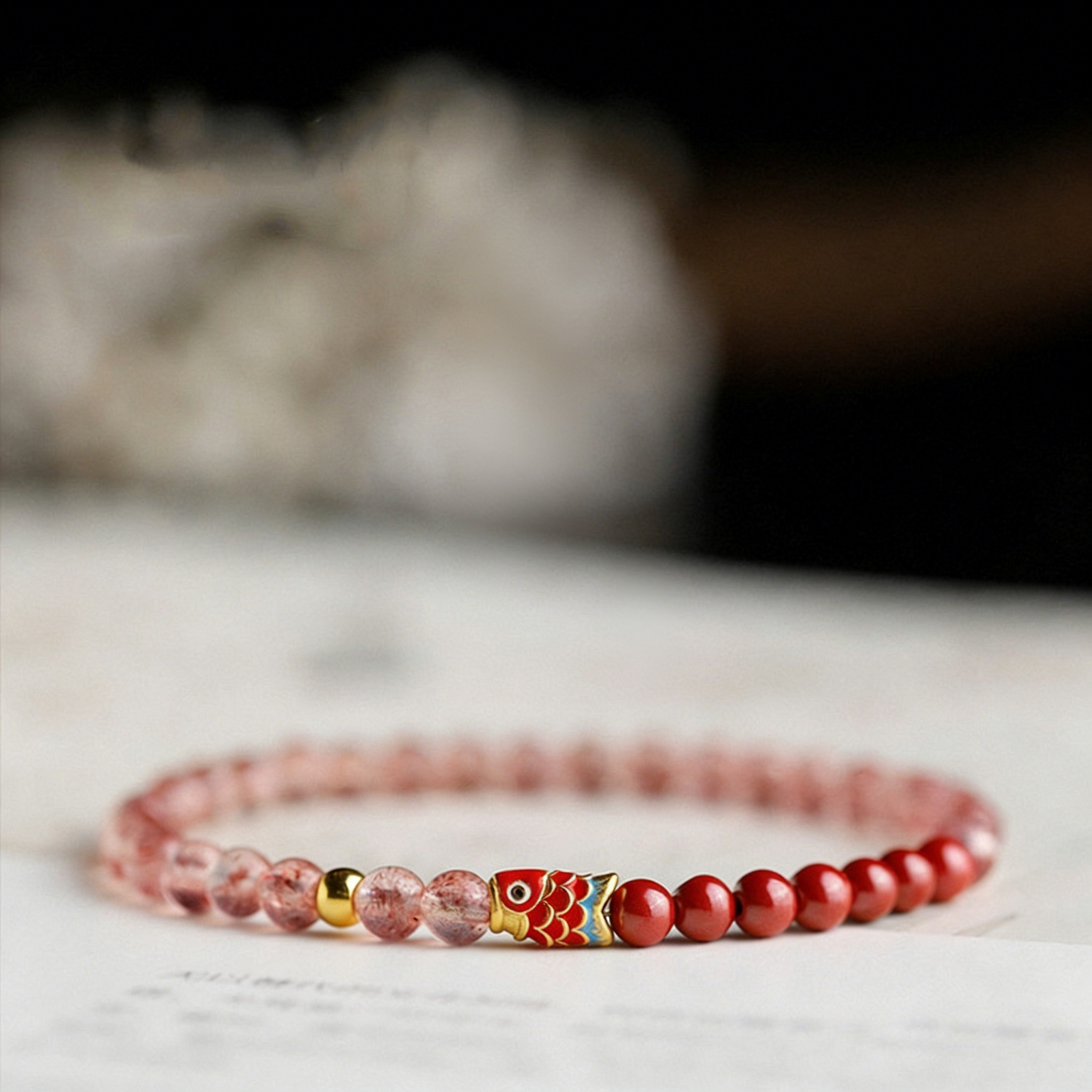
A cinnabar bracelet carries several layers of spiritual meaning:
1. Protection Against Negative Energy (辟邪 / Bi Xie)
This is cinnabar primary spiritual function in Taoist tradition. Cinnabar is believed to possess strong Yang (阳) energy — the active, protective, light-bringing force that counteracts Yin (阴) or negative influences. In Taoist cosmology, spirits and negative energies are Yin in nature; cinnabar fiery red Yang energy is believed to repel them. Wearing cinnabar is like carrying a portable spiritual shield.
2. Calming the Spirit (安神 / An Shen)
In Traditional Chinese Medicine (TCM), cinnabar was used (in carefully processed, minute quantities) as a "Shen-calming" substance. Shen (神) refers to consciousness, spirit, or mind — the aspect of self that can become agitated by stress, anxiety, and overthinking. Cinnabar grounding energy is believed to calm an overactive Shen, promoting mental clarity, emotional stability, and restful sleep.
3. Vitality and Life Force (生命力 / Sheng Ming Li)
The color red has been associated with life force, blood, and vitality across virtually all human cultures. In Chinese tradition specifically, red (Hong / 红) is the color of celebration, weddings, New Year, and all auspicious occasions. A cinnabar bracelet channels this vibrant red energy as a daily reminder of your own vitality, passion, and aliveness.
4. Attracting Good Fortune (招福 / Zhao Fu)
Cinnabar red color is considered highly auspicious (Ji / 吉) in Chinese culture. Red envelopes (Hong Bao / 红包) contain monetary gifts during New Year. Red banners adorn doorways during celebrations. Red clothing is worn to attract luck. Cinnabar jewelry extends this principle — wearing red cinnabar is a continuous act of inviting auspicious energy into your life.
How to Identify Authentic Cinnabar
With cinnabar growing popularity in spiritual jewelry, imitation products have flooded the market. Here is how to distinguish genuine natural cinnabar from fakes:
- Weight Test: Authentic cinnabar is notably heavy due to its high mercury sulfide content. It feels substantially heavier than plastic or resin imitations of the same size.
- Color Test: Genuine cinnabar has a deep, rich vermilion red with subtle natural variations between beads. Fake cinnabar often looks uniformly bright red or orange-red without variation.
- Temperature Test: Natural stone feels cool to the touch initially and warms slowly. Plastic or resin imitations warm up quickly and feel lighter.
- Scratch Test (gentle): Authentic cinnabar has a Mohs hardness of 2-2.5, making it relatively soft. If you gently rub it against unglazed porcelain, it should leave a red streak (the "streak test"). Fake materials will not leave this mark.
- Price: Natural cinnabar is a rare mineral. If a "cinnabar bracelet" costs less than $15-20, it is almost certainly fake or heavily processed.
Note: seer.today cinnabar bracelets use only authentic natural cinnabar sourced from traditional Chinese mineral suppliers. Each bracelet is handcrafted with genuine cinnabar stone beads.
How to Wear a Cinnabar Bracelet
Which Wrist?
Wear cinnabar on the left wrist — the receiving side in Chinese and Buddhist energy traditions. The left wrist absorbs protective Yang energy from the cinnabar throughout the day. For those who prefer the right wrist, that is also acceptable — the most important factor is your personal comfort and intention.
When to Wear?
Cinnabar bracelets are designed for daily wear. They are particularly recommended during:
- Travel: Cinnabar protective qualities make it an ideal travel companion.
- Challenging Life Periods: During transitions, difficult decisions, or emotional challenges, cinnabar provides energetic support.
- Crowded or Unfamiliar Environments: Taoist tradition recommends cinnabar when entering places with unknown or potentially negative energy.
- Spiritual Practice: Wear during meditation, prayer, or intention-setting rituals.
When to Remove?
Remove your cinnabar bracelet during bathing, swimming, or intense physical activity. Cinnabar is relatively soft (Mohs 2-2.5) and can be scratched by harder materials. Also remove during sleep if the bracelet feels uncomfortable.
Cinnabar Bracelet Care Guide
- Keep Dry: Cinnabar should not be submerged in water for extended periods. Remove before showering or swimming.
- Avoid Chemicals: Perfumes, lotions, and household cleaners can damage cinnabar surface. Apply products before putting on your bracelet.
- Gentle Cleaning: Wipe with a soft, dry cloth only. Do not use jewelry cleaners, ultrasonic machines, or abrasive materials.
- Separate Storage: Store cinnabar separately from harder stones (diamonds, sapphires, quartz) to prevent scratches. A fabric pouch is ideal.
- Avoid Sunlight: Prolonged direct sunlight can fade cinnabar vibrant red color over time. Store in a shaded place.
- Energetic Cleansing: Expose to moonlight (especially Full Moon) for 4-6 hours once a month. Smudge with sandalwood incense to clear accumulated energy.
Cinnabar in Traditional Chinese Medicine: A Historical Note
Historically, cinnabar (Zhu Sha) was used in Traditional Chinese Medicine (TCM) as a "Shen-calming" substance, prescribed in carefully processed, minute quantities for conditions involving anxiety, insomnia, and palpitations. Important safety note: Raw cinnabar contains mercury sulfide and should NOT be ingested. Modern TCM uses only heavily processed, purified cinnabar under strict professional supervision. Cinnabar bracelets worn externally are completely safe — the mercury in cinnabar is chemically bound as mercury sulfide (HgS), which is not absorbed through the skin.
Frequently Asked Questions
Does cinnabar really protect against negative energy?
Millions of people across Chinese, Tibetan, and Southeast Asian cultures have worn cinnabar for protection for over two millennia. From a modern perspective, cinnabar works through a combination of symbolic psychology (the placebo effect of wearing a "protective" object is well-documented in scientific literature), cultural grounding (connecting with ancestral traditions reduces existential anxiety), and intention reinforcement (daily visual reminders strengthen your resolve and confidence). Whether you interpret the protection as metaphysical, psychological, or both, the effect is real for those who wear it with intention.
Can I wear cinnabar with other bracelets?
Yes. Cinnabar pairs beautifully with Black Obsidian (adds grounding and additional protection), Citrine (combines wealth energy with cinnabar protection), and Sandalwood (adds calming, meditative energy). Avoid pairing with very hard stones that might scratch the cinnabar surface.
Explore Authentic Cinnabar Jewelry: Shop Cinnabar Bracelets →